Why Modern Mineral Exploration Is No Longer Just About Speed — It’s About Confidence
As a new year begins, exploration teams across the mining industry are asking familiar questions:
Which projects deserve attention this year?
Where should capital be deployed first?
How much uncertainty is acceptable before moving forward?
These questions are not new.
What has changed is the pressure surrounding them.
Across the sector, one reality is becoming increasingly clear:
Speed matters — but only when paired with confidence.
The Industry Is Moving Faster, but the Timelines Haven’t Changed
Global demand for critical minerals continues to accelerate, yet mineral discovery remains a long and capital-intensive process.
Traditional exploration programs still require:
multi-stage geological evaluation
field surveys
geophysical interpretation
drilling campaigns
repeated reassessment cycles
These workflows can take years before companies reach sufficient confidence to make major investment decisions.
What has changed is the industry’s tolerance for uncertainty.
Exploration teams are no longer being asked to move faster simply for the sake of activity. They are being asked to reduce uncertainty earlier so decisions can be made with greater conviction.
Capital Is Becoming More Selective
Exploration capital is moving faster — and filtering harder.
Investors, operators, and boards increasingly want early clarity around:
which projects should advance
which targets justify additional drilling
which risks are understood early
and which programs should be deprioritized before more capital is committed
Projects that achieve confidence earlier often maintain momentum.
Projects that remain uncertain for too long may struggle to secure continued support, regardless of long-term geological potential.
Speed Without Confidence Creates More Risk
In exploration, moving faster without sufficient confidence rarely improves outcomes.
It often leads to:
poorly prioritized drill programs
repeated reinterpretation cycles
escalating exploration costs
unnecessary environmental disturbance
reduced stakeholder confidence
The industry is increasingly recognizing that activity alone is not progress.
Real progress comes from shortening the distance between early geological signals and reliable decision-making.
Improving Speed and Confidence Simultaneously
This is where advanced targeting technologies are beginning to play a larger role in early-stage exploration workflows.
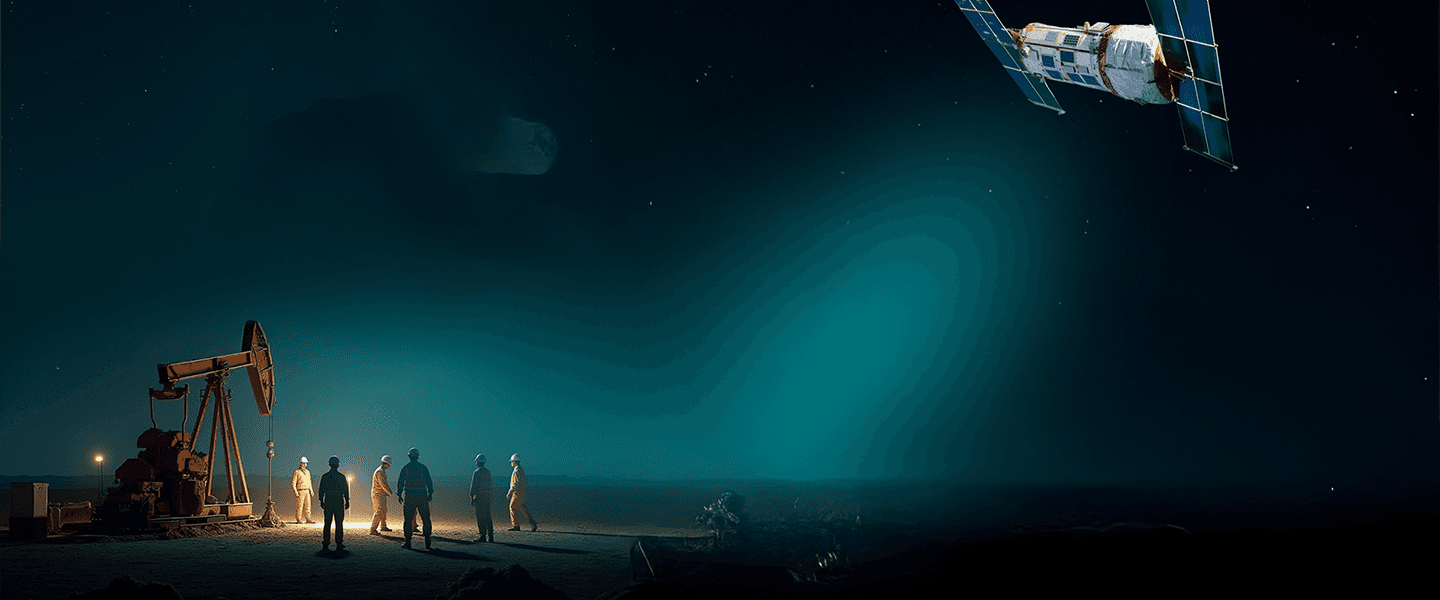
AMRT™ (Atomic Mineral Resonance Tomography) is CC Explorations’ satellite-based subsurface mapping technology designed to help exploration teams evaluate mineral potential before drilling begins.
Unlike traditional workflows that rely heavily on sequential field surveys and incremental interpretation cycles, AMRT™ analyzes geological signals remotely using:
satellite sensors
remote sensing physics
multispectral and hyperspectral datasets
terrain and anomaly modeling
AI-assisted interpretation systems
The result is layered subsurface mapping designed to help teams prioritize targets and reduce uncertainty earlier in the exploration process.
Importantly, the objective is not to replace geological expertise or field validation.
The goal is to provide exploration teams with stronger data and additional context earlier — allowing speed and confidence to work together rather than against one another.
Faster Insights Before Major Drilling Programs
One of the key advantages of satellite-based targeting technologies is the ability to accelerate early-stage evaluation timelines.
AMRT™ deliverables are often completed within approximately 15–45 days, allowing exploration teams to assess large territories before committing significant field resources.
Because the system integrates multiple geological and remote sensing datasets into a unified interpretation model, AMRT™ has demonstrated correlation accuracy of up to 93% in validation studies and drilling comparisons.
In practical terms, this may help teams:
accelerate early-stage target evaluation
improve confidence before mobilizing drilling crews
prioritize fieldwork more efficiently
reduce unnecessary drilling activity
lower exploration costs and environmental impact
The Future of Exploration May Depend on Earlier Confidence
As the mining industry continues adapting to rising capital pressure, increasing demand for critical minerals, and stricter environmental expectations, exploration workflows are evolving.
The companies that move fastest may not necessarily be the ones drilling first.
They may be the teams making better decisions earlier.