Why Data-Driven Exploration Is Becoming Essential in Modern Mining
As the mining industry moves toward 2026, exploration companies are operating in an increasingly complex environment shaped by geopolitical pressure, accelerating critical mineral demand, and rapid advances in exploration technology.
Across the sector, one shift is becoming increasingly clear:
Competitive advantage is no longer defined solely by access to ground.
It is increasingly defined by the ability to process data faster, reduce uncertainty earlier, and make smarter exploration decisions before significant capital is deployed.
The Industry Is Entering a New Exploration Cycle
Demand for critical minerals continues accelerating across sectors including:
electric vehicles
battery manufacturing
renewable energy infrastructure
semiconductors
defense and advanced manufacturing
At the same time, geopolitical tensions surrounding rare earth supply chains are reshaping how governments and companies approach mineral security.
China’s continued dominance in rare earth production and processing has intensified global efforts to diversify supply chains and identify new sources of strategic minerals.
As a result, exploration companies are under increasing pressure to evaluate projects faster while reducing operational and financial risk.
Why Data and Precision Matter More Than Ever
Traditional exploration workflows remain expensive, time-intensive, and highly uncertain during the early stages of project evaluation.
To improve targeting efficiency, many exploration teams are increasingly integrating:
remote sensing technologies
hyperspectral imaging
AI-assisted interpretation
satellite-based geological analysis
advanced geospatial modeling
into their exploration workflows.
The objective is not simply to accelerate activity.
The goal is to improve confidence before major drilling programs begin.
Remote Sensing Is Moving Into the Mainstream
Skepticism around satellite-based mineral exploration has declined significantly in recent years as real-world case studies continue demonstrating operational value.
Projects supported by organizations such as the European Union Agency for the Space Programme (EUSPA) have highlighted how remote sensing technologies can support:
mineral targeting
geological interpretation
environmental monitoring
ground movement analysis
exploration planning
As validation data continues growing, remote sensing is increasingly being integrated into mainstream mineral exploration workflows rather than treated as experimental technology.
How AMRT™ Supports Faster Exploration Decisions
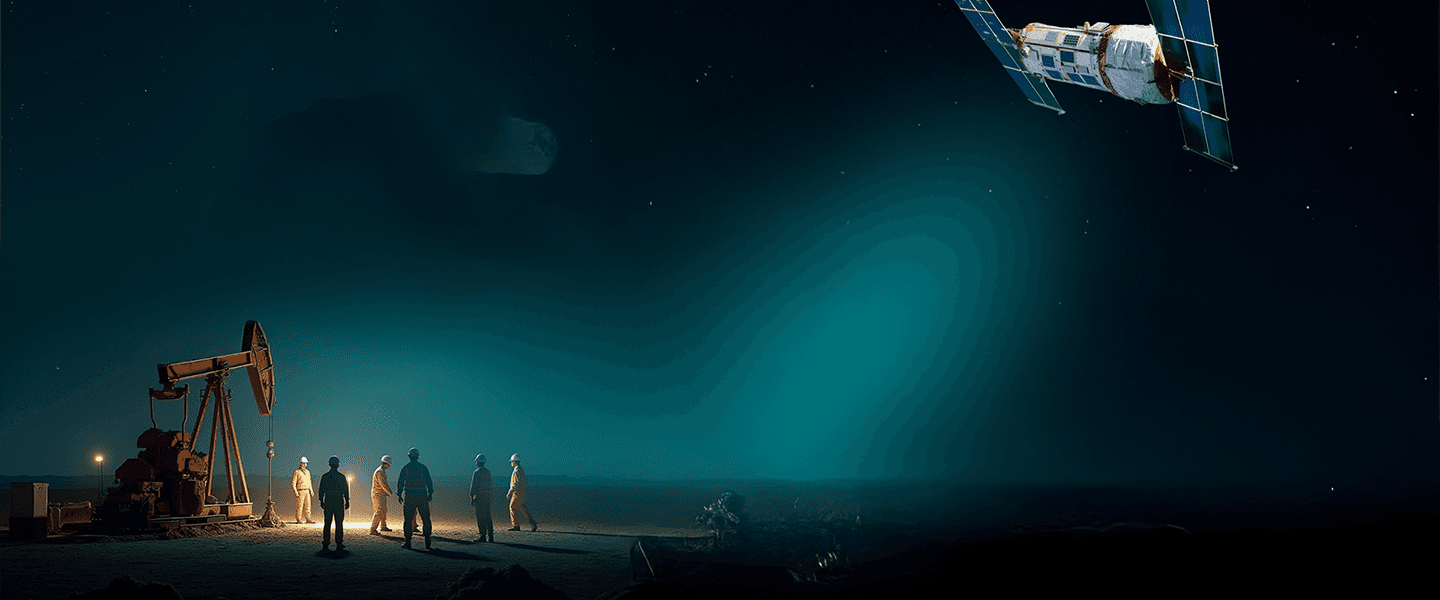
At CC Explorations, the company’s proprietary AMRT™ (Atomic Mineral Resonance Tomography) technology is designed to help exploration teams identify mineral potential before drilling begins.
AMRT™ combines:
satellite sensing
spectral data analysis
geospatial physics
AI-assisted modeling
geological and geophysical interpretation
to generate subsurface targeting insights remotely.
The objective is to help exploration teams:
improve targeting precision
shorten discovery cycles
reduce unnecessary field activity
optimize exploration spending
strengthen early-stage confidence
As exploration budgets tighten and expectations around sustainability increase, technologies that improve targeting efficiency before drilling are becoming increasingly valuable.
AI and Advanced Analytics Are Reshaping Exploration Strategy
According to Deloitte’s “Tracking the Trends 2025” report, AI and advanced analytics are rapidly becoming central to modern mineral exploration.
By integrating:
satellite imagery
hyperspectral datasets
geophysical surveys
historical geological records
exploration companies can evaluate projects more efficiently and prioritize higher-probability targets earlier in the process.
This shift toward data-driven exploration is expected to accelerate as competition for critical minerals intensifies globally.
The Future of Exploration Is Becoming More Data-Driven
Mining companies today are balancing multiple pressures simultaneously:
rising exploration costs
tighter capital discipline
increasing environmental scrutiny
demand for faster project evaluation
growing competition for strategic minerals
In response, exploration workflows are evolving toward technologies capable of improving clarity before major operational commitments are made.
For many organizations, the future of exploration may depend less on drilling faster — and more on making better decisions earlier.